Five hours, every night, for ten years.
Most discussions of sleep stop at the eye bags. The eye bags reset overnight. What does not reset is the structural debt — collagen, cortisol, slow-wave repair — and over a decade, the debt shows.

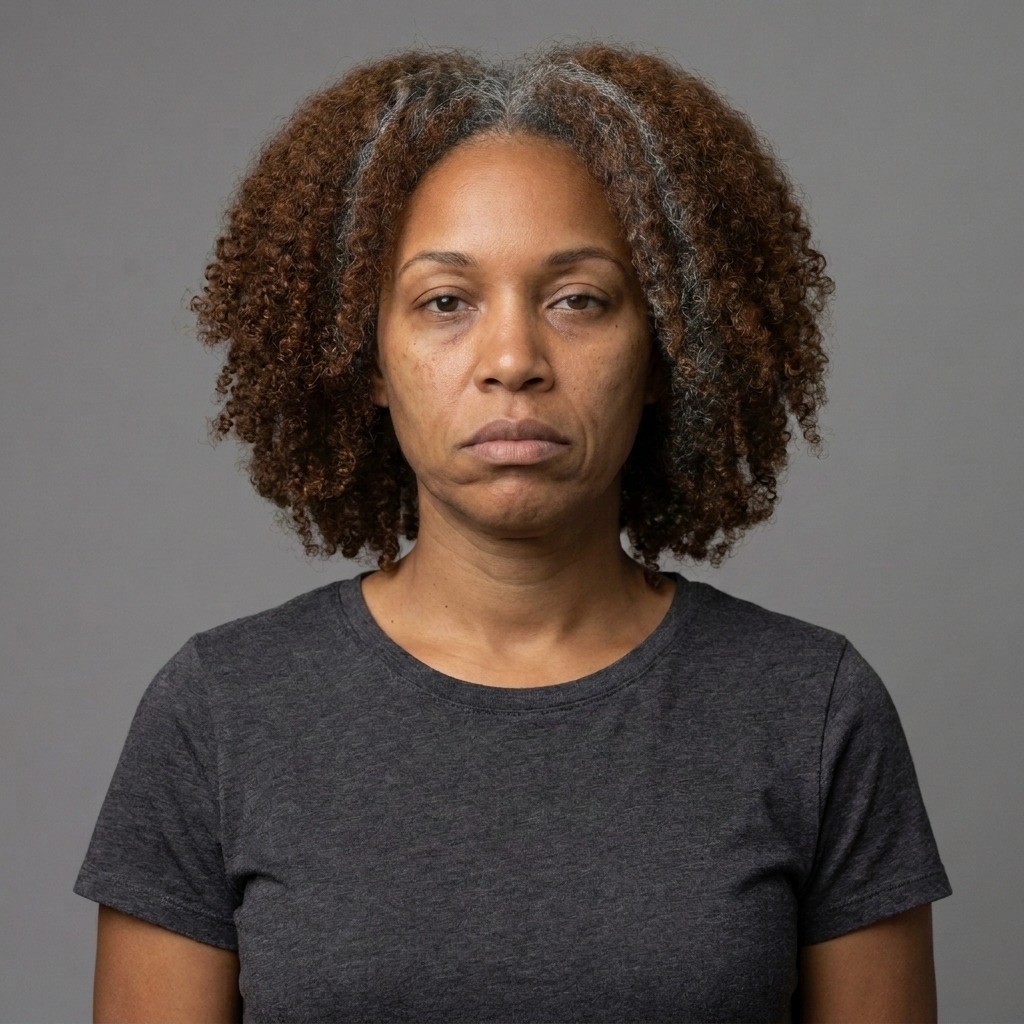
What "5 hours" actually means biologically
A consistent 5-hour night sits below the lower bound of what the body can repair on. Most adults need 7 to 9 hours; 5 is a 30 to 40 percent shortfall. The shortfall lands hardest on three systems:
- Cortisol stays elevated longer through the day. Cortisol breaks down collagen.
- Growth hormone under-secretes, because most of it releases during slow-wave sleep — the stages 5 hours mostly skip.
- Inflammation markers drift up. Chronic low-grade inflammation slowly degrades the connective tissue under skin.
You will not feel any of these on Tuesday. They are not symptoms. They are baseline shifts that compound over years.
The 10-year mark
By year three, most observers can guess (above chance) which of two same-age faces belongs to the chronic 5-hour sleeper. By year seven, the gap is unmistakable to strangers. By year ten, the structural difference is large enough that the chronic short-sleeper looks measurably older than chronological age — typically by 4 to 8 years.
The published evidence:
- Sundelin et al., 2017 (Royal Society Open Science) — sleep-restricted faces rated as less healthy, less attractive, less approachable, by observers blinded to condition.
- Oyetakin-White et al., 2015 — poor sleepers had measurably worse skin barrier function, slower UV recovery, and were rated older than chronological age.
- Axelsson et al., 2010 — even short-window deprivation produces visible signal in passport-style photographs.
These are short-window studies. Nobody runs a 10-year RCT on sleep restriction (it would be unethical). What the literature does support is the direction and mechanism — and the people who study sleep professionally do not sleep 5 hours by choice.
What changes the math
Not warnings. Not knowledge. Most short sleepers know it is bad and continue.
What plausibly changes the math is contact. Specifically, contact with the version of yourself the current pattern is producing. That contact has been studied (Hershfield, Stanford 2011) — a single visual encounter with the aged self shifted retirement-saving decisions immediately afterward by about 41%.
Precog runs that encounter every Sunday at 7 PM, drawn from your real habits, with your real face.
If you sleep 5 hours
If you read this and recognize yourself, the most useful first move is not "sleep more." It's to find the 40-minute pocket of true autonomy that is missing from your day, and install it somewhere it can survive — usually the morning. Without it, the 1 AM rebellion has too much fuel to be will-powered away.
After that, a mirror — pen-and-paper journal, or Precog — that holds the long-term cost in view, on a cadence the brain registers.
See your own version on Sunday at seven.
Download on theApp Store- Sleep · 6 hours
Sleep 6 hours a night for 10 years — what it does to your face
- Sleep · 7 hours
Sleep 7 hours a night for 10 years — what it does to your face
- Exercise · strength training
Strength training 3x a week for 10 years — what it does to your face
- Exercise · yoga
Yoga 3x a week for 10 years — what it does to your face
- Diet · intermittent fasting
Intermittent fasting for 10 years — what it does to your face
- Sleep · 1 AM bedtime
Going to bed at 1 AM for 10 years — what it does to your face
- Water · coffee-only
Replacing water with coffee for 10 years — what it does to your face
- Exercise · weekend only
Weekend-warrior exercise for 10 years — what it does to your face
- Exercise · daily walking
Walk 30 minutes a day for 10 years — what it does to your face
- Exercise · none
No exercise for 10 years — what it does to your face
- Exercise · 3×/week
Exercise 3 times a week for 10 years — what it does to your face
- Water · chronic deficit
Mild chronic dehydration for 10 years — what it does to your face
- Water · sustained
Well-hydrated for 10 years — what it does to your face
- Sleep · 8 hours
Sleep 8 hours a night for 10 years — what it does to your face